What Your Dog Learns When You're Not Training
 Sue Watkins
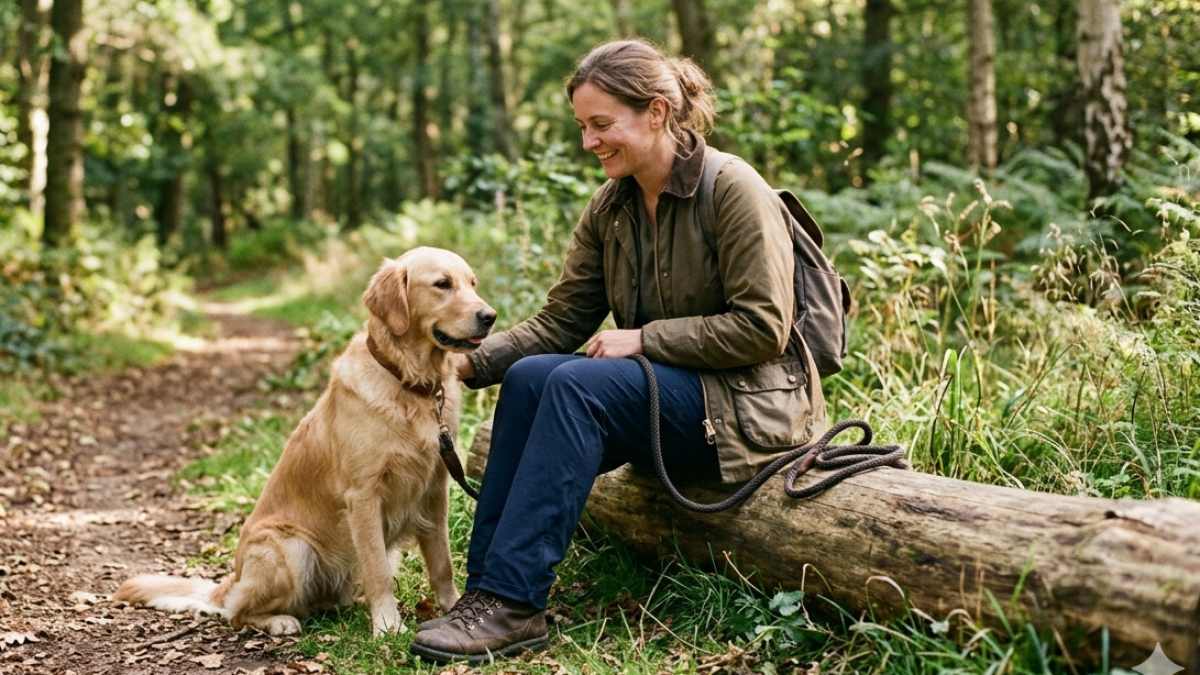
Training doesn't just happen during dedicated sessions. Discover how everyday interactions shape your dog's behaviour and build your relationship.
What Your Dog Learns When You're Not Training
When people think about dog training, they often picture a dedicated session with treats, toys, whistles, and a clear goal in mind. Perhaps it's practising retrieves, improving heelwork, or working on steadiness around distractions.
But the reality is that our dogs are learning all the time.
Every interaction, every walk, every mealtime, and every moment spent together is shaping the behaviours we see in our dogs. In many ways, some of the most important lessons are learned when we aren't actively trying to teach anything at all.
The Power of Everyday Experiences
Dogs learn through consequences. Behaviours that are rewarding are likely to be repeated, whilst behaviours that are unsuccessful are less likely to occur in the future.
This means that every day we are influencing our dogs' learning, whether we realise it or not.
A dog that pulls towards every interesting smell and successfully reaches it is learning that pulling works.
A dog that calmly sits and waits before a lead is clipped on is learning that patience pays off.
A dog that settles quietly while the family eats dinner is learning that calm behaviour is worthwhile.
None of these situations may look like formal training, but they are all learning opportunities.
Consistency Matters More Than Perfection
One of the biggest challenges for dog owners is trying to be perfect. In reality, perfection isn't necessary.
What matters is consistency.
If your dog receives the same information most of the time, they will begin to understand what works and what doesn't. Occasional mistakes won't undo months of good training.
This can be particularly reassuring when living with an adolescent dog. Young dogs often appear to forget everything they know, testing boundaries and making choices that leave their owners wondering whether any training has taken place at all.
The truth is that learning is rarely a straight line. Progress often comes with plenty of ups and downs along the way.
Relationships Are Built Between Training Sessions
As trainers, we often focus on skills. Retrieves, recalls, steadiness, stop whistles, and directional work all have their place.
However, the relationship between dog and handler is built largely outside of those training exercises.
It is built through trust, understanding, predictability, and shared experiences.
It develops when owners learn to recognise when their dog is tired, overwhelmed, excited, or worried.
It grows when dogs learn that their handlers provide guidance, support, and opportunities for success.
The strongest working partnerships are rarely created through endless repetition of exercises. They are built through thousands of small interactions that happen every single day.
Work With the Dog You Have at That Moment
One of the most valuable lessons any owner can learn is to work with the dog they have at that moment, not the dog they had yesterday or the one they will have tomorrow.
Some days your dog will be focused and engaged.
Other days they may be distracted, tired, overexcited, or simply struggling to cope with their environment.
Rather than becoming frustrated, view these moments as information. They tell us what our dogs need from us right now.
Training isn't about forcing progress according to a timetable. It's about meeting the dog in front of us and helping them succeed.
Making Everyday Life Count
You don't need an hour-long training session every day to make progress.
Waiting calmly before meals.
Walking nicely to the car.
Settling quietly while you drink a cup of tea.
Choosing to check in with you on a walk.
These small moments add up.
When we start to see everyday life as part of our dog's education, we discover that training isn't something we do occasionally.
It's something that happens every day, whether we notice it or not.
The next time you find yourself wondering whether you've done enough training this week, remember that your dog is learning from you every single day. The question isn't whether learning is taking place, but what lessons are being learned.