Training can be a funny old business.
 Sue Watkins
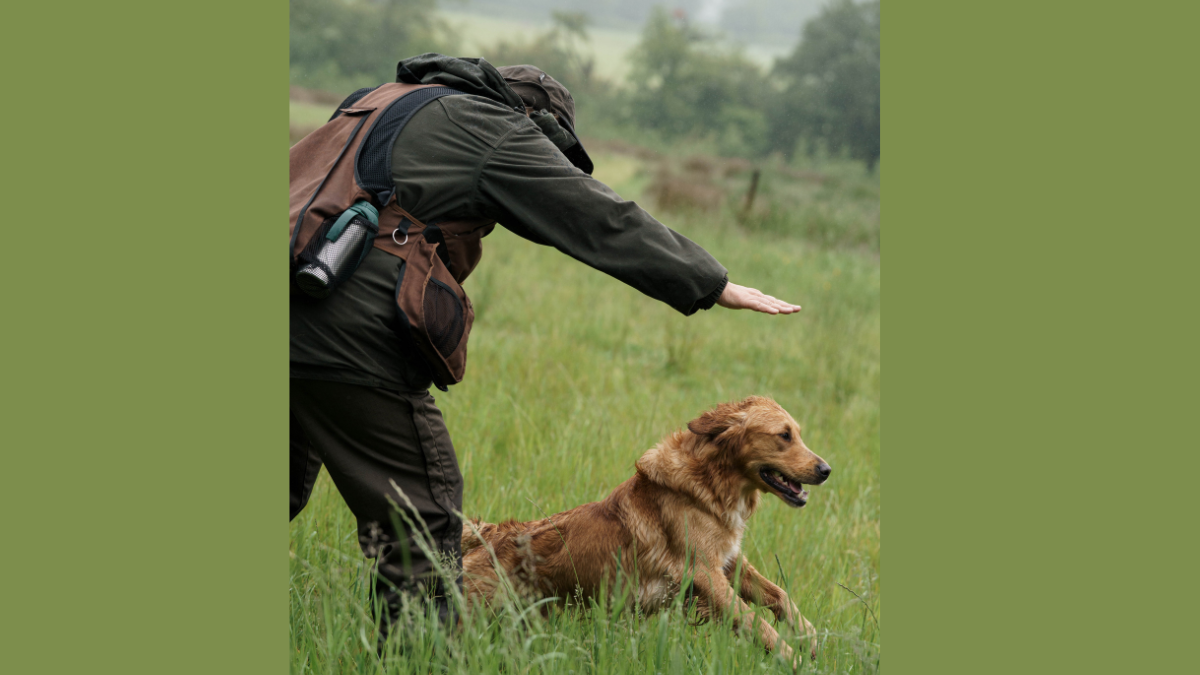
Training isn't linear. Griff's latest training journey is a reminder that frustrating setbacks are often followed by the breakthroughs we least expect
Training can be a funny old business.
If you have followed Griff’s training journey for any length of time, you will know that he has a habit of keeping me humble. Just when I think we are making real progress in one area, he reminds me that training is rarely a straight line from A to B.
Last week I attended a workshop designed to develop the dogs’ confidence and understanding around barriers. The aim was to teach them how to tackle different obstacles while maintaining the line they had been sent on. As the day progressed, the barriers were intended to become increasingly complex, finishing with a retrieve that involved navigating five separate obstacles, including water, stock fencing and post-and-rail fencing.
At least, that was the plan.
What actually happened was that the day became one of the most frustrating training experiences I can remember.
Not because there was anything wrong with the training. Quite the opposite. The exercises were well thought out and progressed sensibly. The problem was that Griff arrived determined to continue our ongoing battle over revisiting areas where he had already retrieved from. If he has been somewhere once, he often sees little value in returning there a second time.
As the day went on, my objective shifted dramatically. Rather than focusing on barrier work, my goal became simply getting Griff to go for a memory retrieve the first time I asked rather than the third. We achieved that occasionally, but without any real consistency or reliability.
By the end of the day, I had a long list of things to work on and very little opportunity to focus on the actual topic of the workshop.
It was frustrating.
I think most trainers and handlers can relate to that feeling. You invest the time, travel several hours, pay for a training day and arrive keen to work on a specific skill, only to discover that your dog has other ideas. Instead of building on your planned foundations, you find yourself revisiting a problem you thought was improving.
The reality is that dogs do not read the lesson plan.
Sometimes they expose gaps in our training that we would rather not see. Whilst none of us learn much when everything goes perfectly, there are days when a barrage of difficulties feels a little overwhelming.
Then, five days later, everything looked very different.
I attended another training day, this time at a different venue. Large training days have traditionally been challenging for Griff. He finds them incredibly exciting and has often struggled to manage himself in those environments. The combination of people, dogs, dummies, shot and water can push him well beyond his ability to think clearly.
This time, however, something had changed.
Was he perfect? No.
But perfection was never the goal.
For the first time, I was able to stand and wait my turn alongside other handlers without Griff completely losing the plot. He settled. He watched. He thought.
Even more encouragingly, we managed to take part in a walk-up exercise. He wasn't off lead—I used a heeling lead to help him make good choices—but he walked at heel, remained steady when shots were fired, watched dummies being thrown, observed other dogs working and then completed his own retrieves exactly as asked.
To many people, those things might sound quite ordinary.
To me, they felt huge.
I left that training day feeling absolutely thrilled. Not because everything was perfect, but because I could see genuine progress. The dog I worked five days earlier was still the same dog, but suddenly I was seeing the results of months of consistent training.
It was a reminder that progress often hides beneath the surface.
Sometimes we become so focused on the thing that isn't working that we fail to notice all the things that are improving. We can spend an entire day frustrated by one weakness while overlooking ten areas where our dog is quietly becoming more capable.
Those wins matter.
They are what keep us going when training feels difficult. They give us the motivation to continue working through the struggles and remind us why we started in the first place.
Most importantly, they remind us of something every dog trainer knows, yet occasionally forgets:
Training is not linear.
There will be setbacks. There will be plateaus. There will be days when you question whether you are making any progress at all. Then there will be days when your dog quietly shows you just how much they have learned.
The challenge is not expecting a straight line. The challenge is trusting the process and continuing to turn up, even when things aren't going according to plan.
Because sometimes the biggest breakthroughs arrive only a few days after the most frustrating setbacks.
And Griff, as always, is proving to be an excellent teacher of patience.